
Real wedding planning advice from a Nassau County expert who's been doing this since 1997 — covering timelines, vendor coordination, and what most couples miss.
Most couples start planning a wedding with a lot of energy and a short list. Venue. Dress. Flowers. Then, about three weeks in, the list is forty items long and growing — and every vendor you call is already booked for your date.
Wedding planning in Nassau County moves fast. The best venues and vendors here fill up 12 to 18 months out, sometimes longer. And the decisions compound quickly: budget, guest count, cultural traditions, family dynamics, seating logistics. It’s a lot to carry, especially while living the rest of your life.
This page is here to help you understand what solid wedding planning actually looks like — and what separates a smooth, memorable celebration from one that felt like a second job.
A wedding organiser is not someone who hands you a checklist and wishes you luck. The real job is to carry the planning burden so you don’t have to — managing vendor communication, building and protecting your timeline, reviewing contracts, and making sure every moving piece is accounted for long before the wedding day arrives.
The distinction matters because a lot of couples assume they can handle the logistics themselves and bring in help only for the day. That works sometimes. But day-of coordination can only be as good as the planning that came before it. If vendor contracts are vague, timelines are loose, or key confirmations haven’t happened, no coordinator can fix structural problems on a Saturday morning.
A professional organiser is also your early warning system. We know which questions to ask vendors before signing, which timeline gaps tend to cause problems, and which decisions need to happen now — not in three months when it’s too late to change course.

Planning and coordination are often treated as separate services — and technically, they are. Planning covers everything leading up to the wedding: venue selection, vendor sourcing, budget management, design direction, and timeline construction. Coordination is the execution phase: making sure everything actually happens as planned, in the right order, with the right people in the right places.
The problem with separating them is the handoff. When a day-of coordinator inherits a plan they didn’t build, they’re working from someone else’s assumptions. They don’t know which vendor has a complicated delivery window, which family member needs to be kept away from the microphone, or which timeline item has a hidden dependency that could unravel the whole sequence if it slips by twenty minutes.
When planning and coordination live under the same roof, that gap disappears. The person managing your day knows every detail of your plan because they built it. That continuity is what makes a wedding feel effortless from the outside — even when, behind the scenes, a dozen small problems were quietly handled before you ever noticed them.
We’ve been doing both — planning and coordination as one integrated service — since 1997. In that time, we’ve planned hundreds of celebrations across Nassau County, Long Island, Westchester, and New York City. We know the Garden City Hotel’s loading dock schedule. We know which florists in the area communicate well under pressure and which ones need a follow-up call the week before. That kind of knowledge doesn’t come from a certification. It comes from three decades of showing up.
Nassau County weddings also carry their own specific weight. Guest counts here tend to run larger than national averages — 141 to 151 guests is the Long Island norm, and many Syosset and Great Neck celebrations run well beyond that. Multi-generational families, cultural traditions from Jewish, South Asian, Italian-American, and Greek communities, and the social expectations of this particular market all shape how a wedding needs to be planned. A planner who’s been working this community for 30 years isn’t learning those dynamics on your dime.
The 12-to-18-month planning window isn’t arbitrary. It reflects the actual booking reality of the Nassau County and NYC metro market. Popular venues — places like the Garden City Hotel — fill their best dates early. Top photographers, florists, and caterers are often committed a year or more in advance. If you’re working backward from a specific date, the clock starts the moment you get engaged.
The first three months are typically the most consequential. Venue and date lock everything else in. Your guest count shapes your budget. Your budget shapes every vendor conversation that follows. Getting these foundational decisions right — and in the right order — prevents the kind of expensive course-corrections that happen when couples skip ahead.
From there, the middle months are about building out the vendor team, confirming contracts, and making design decisions while options are still open. Florals, catering, entertainment, photography, transportation — each category has its own lead time, and each vendor relationship needs to be managed actively, not just initiated and forgotten.
The final 60 to 90 days are when the details converge. Final headcounts, seating arrangements, vendor timelines, day-of logistics, and rehearsal coordination all land in this window. For couples managing this themselves, it’s often the most stressful stretch. For couples working with us, it’s usually when they feel most relieved — because someone else is holding all of it.
One thing worth saying clearly: the timeline is not just a schedule. It’s a risk management tool. Every confirmed vendor, every signed contract, every locked detail is one less thing that can go sideways on the day. The couples who feel the most at ease on their wedding day are almost always the ones who had the most thorough planning behind them.
Want live answers?
Connect with a Debbie Hart Celebrations expert for fast, friendly support.
There’s a version of wedding planning that’s purely logistical — spreadsheets, timelines, vendor emails. And then there’s the version that reflects how weddings actually work: as emotional, relational, high-stakes events that involve families, histories, expectations, and a lot of moving parts that no spreadsheet fully captures.
Nassau County weddings, in particular, tend to involve a lot of people who care deeply about how things go. Extended families, cultural traditions, and the social fabric of communities like Syosset, Woodbury, and Great Neck mean that a wedding here isn’t just a party — it’s a statement. Getting it right matters, and the pressure that comes with that is real.
What couples here actually need isn’t just someone to manage vendors. It’s someone who understands the full picture and can carry it steadily from the first consultation to the last dance.

This is one of the most common questions we hear, and it deserves a direct answer. The average wedding in New York State costs around $42,000, according to 2025 industry data. In the NYC metro area — including Nassau County — that number climbs to $51,000 or higher. For Nassau County celebrations with larger guest counts and premium vendors, it often goes further.
At that investment level, the cost of a professional planner is proportionate. More importantly, it’s often offset. We have established vendor relationships that allow us to negotiate better terms, flag contract clauses that protect you from unexpected fees, and prevent the kind of last-minute decisions that always cost more than planned ones.
But the financial case isn’t actually the most compelling one. The real value is what you don’t experience: the 11pm vendor email spirals, the weekend consumed by seating chart revisions, the anxiety of not knowing whether everything is confirmed. Couples who work with us consistently describe the same outcome — they got to enjoy their engagement. They got to be present on their wedding day. That’s not a luxury. For most people, it’s the whole point.
We also hear from couples who tried to manage planning themselves and brought in help later, usually after hitting a wall. It’s always possible to course-correct, but starting with professional guidance from the beginning means the foundation is solid — not something that needs to be rebuilt under time pressure.
Full-service event planning means we’re involved from the beginning — not just the week before the wedding. It starts with understanding what you actually want: the feeling of the day, the aesthetic, the experience you want your guests to have. From there, we build the structure that makes that vision possible.
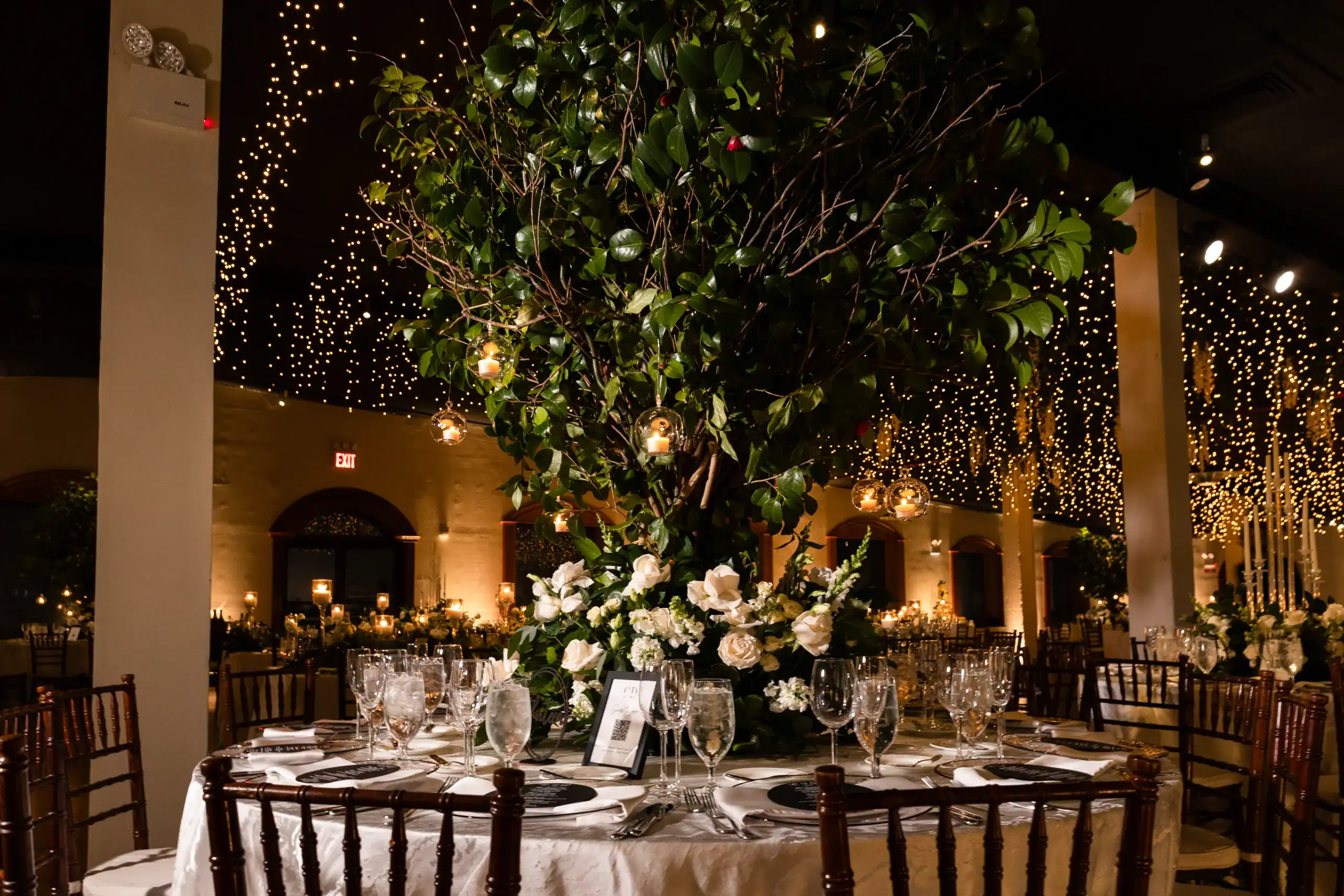
On the design side, we handle concept development, aesthetic direction, floor plan layouts, and décor curation. We specialize in transforming blank-canvas venues into environments that feel entirely personal — spaces that don’t look like a standard package, because they aren’t. Mirrored dance floors, immersive lighting, curated details that reflect who you actually are as a couple. These things don’t happen by accident. They happen because someone with a design eye and operational experience is managing both simultaneously.
On the planning side, we manage vendor sourcing and vetting, contract review, budget tracking, timeline construction, and ongoing coordination with every vendor involved in your event. We’re also the point of contact for your venue, which means you’re not fielding calls from six different people while trying to live your life.
For Nassau County couples considering destination weddings — and that’s a growing segment — we bring the same standards to events outside of Long Island through an extensive global vendor network. You don’t have to sacrifice quality or personal attention because you want to get married in Tuscany or the Caribbean.
What this all adds up to is a single professional relationship that covers everything. Not a planner on one side and a designer on the other, communicating through you. One team, one vision, one point of accountability. That’s what full-service actually means — and it’s what we’ve been delivering across Nassau County and the greater New York area for more than 30 years.
Good wedding plans aren’t about having the longest checklist. They’re about having the right foundation — clear decisions made in the right order, vendors who are confirmed and prepared, and someone who knows what to do when something unexpected happens. Because something always does.
Nassau County weddings carry real weight. The guest counts are larger, the expectations are higher, and the community context matters in ways that a generic planning guide won’t account for. Getting it right takes local knowledge, vendor relationships, and the kind of experience that only comes from doing this work, in this market, for a very long time.
If you’re starting to plan a wedding in Nassau County, NY and want guidance from someone who’s been doing this since 1997, reach out to us. The earlier you start, the more options you have — and the better your day will be for it.
Summary:


Article details:
Share:
