
Getting engaged is the easy part. Here's the wedding planning checklist that keeps everything else from unraveling — built for how Long Island weddings actually work.
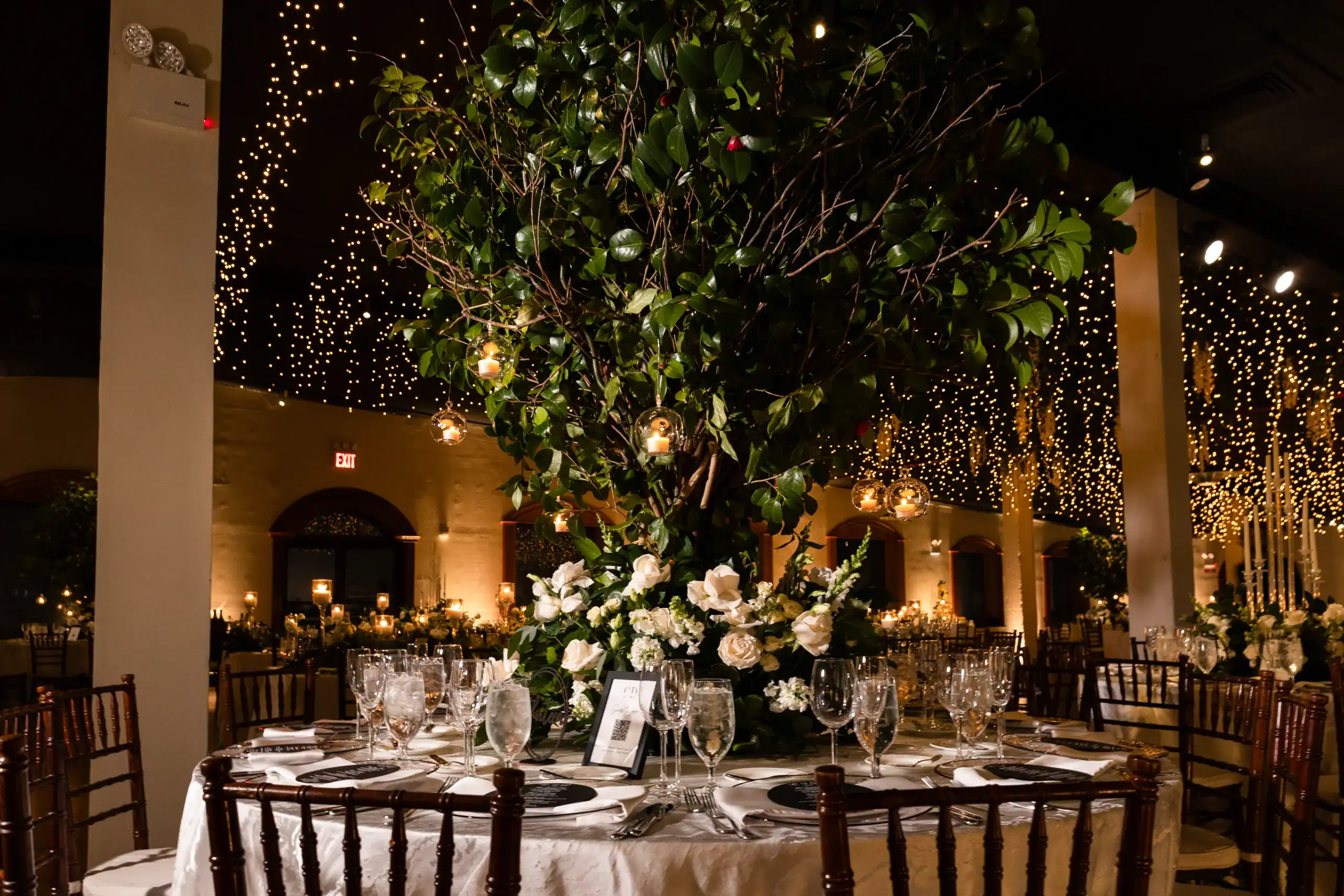
You got engaged. You celebrated. And then someone asked, “So where are you having it?” — and suddenly the weight of the whole thing landed.
Planning a wedding in Nassau County is not like planning one anywhere else. The venues fill up fast, the guest lists run long, and the expectations are high. Families have opinions. Vendors have waitlists. And there are about forty decisions that need to happen before you’ve even thought about flowers.
This guide walks through what a real wedding planning checklist looks like — not a generic template, but one built around how weddings in this market actually come together.
The most common mistake couples make is treating wedding planning like a flat list — as if everything is equally urgent. It isn’t. The first six months are about locking in the decisions that everything else depends on. After that, the pace changes, but it never actually slows down.
Start with your venue. In Nassau County, the best venues — the Garden City Hotel, Westbury Manor, The Carltun at Eisenhower Park — book 12 to 18 months out for peak dates. June and September go first, every year, without exception. If you’re reading this in January and you want a fall wedding, you’re not early. You’re already behind.
Once the venue is confirmed, your date is confirmed — and everything else can be sequenced from there.

A wedding day timeline is not just a schedule. It’s a coordination document that tells every vendor — your photographer, your florist, your DJ, your caterer — exactly where they need to be and when. Without one, you’re relying on everyone to figure it out on the day itself. That’s where things fall apart.
A realistic timeline for a Nassau County wedding with a 6:00 PM ceremony might look something like this: Hair and makeup begins at 10:00 AM for a bridal party of five or more. The photographer arrives around 1:00 PM for detail shots and getting-ready coverage. The florist and décor team should be on-site at the venue no later than noon for a full setup. The officiant confirms arrival by 5:30 PM. Cocktail hour runs from 6:30 to 7:30 PM. The reception begins at 7:30 PM with introductions and dinner service, and the DJ or band plays through to whatever your venue’s cutoff time allows.
What most couples underestimate is the buffer time. Traffic on the LIE and Northern State Parkway on a Saturday morning is real. Vendor call times should be set 30 to 45 minutes earlier than you think you need, especially for vendors coming from Queens or Brooklyn. A photographer stuck in Midtown tunnel traffic at noon is a problem that shows up in your wedding album.
The timeline also needs to account for family photos, which take longer than almost anyone expects. Block out a full 45 minutes after the ceremony for formal portraits if you have a large family — and in Nassau County, large families are the norm, not the exception.
One more thing most generic checklists skip: confirm with your venue coordinator the exact time vendors are permitted to begin setup. Some venues share spaces with other events. Arriving to find the ballroom still in use from a luncheon is a real scenario, and it cascades into everything that follows. We recommend having this confirmed in writing, weeks in advance.
The maid of honor is often the most relied-upon person in the wedding outside of the couple themselves — and most of the time, nobody tells her exactly what that means until it’s too late to prepare.
From the moment she’s asked, her role begins. In the months before the wedding, that means helping coordinate the bridal shower and bachelorette, being available for dress appointments and vendor meetings when needed, and being a sounding board when the planning gets stressful. She’s also typically the point person for the bridesmaids: keeping everyone on schedule, managing dress fittings, and making sure nobody shows up to the rehearsal dinner without knowing where to stand.
In the final weeks, the role gets more logistical. She should have a copy of the wedding day timeline. She should know the vendor contact list in case something comes up and the couple is unavailable. She should be the one holding the emergency kit — safety pins, stain remover, pain relievers, fashion tape, a small sewing kit — because something always needs one of those things, and it’s always at the worst moment.
On the wedding day itself, her job is to keep the energy calm and the couple present. That means running interference with family members who want to ask questions, keeping the bridal party on schedule during photos, and making sure the bride has a moment to actually eat something during cocktail hour. It also means holding the bouquet during the ceremony, adjusting the dress before the processional, and signing the marriage license as a witness.
What the maid of honor is not responsible for is everything. When there’s a professional planner involved, the MOH gets to actually enjoy the day. The vendor questions, the timeline management, the problem-solving — that goes to the planning team. The MOH is there for the couple, not for logistics.
Want live answers?
Connect with a Debbie Hart Celebrations expert for fast, friendly support.
Beyond the timeline, there’s a separate category of wedding planning that’s less about sequence and more about completeness. These are the things that don’t fit neatly into a month-by-month countdown but absolutely cannot be missed.
Vendor categories to confirm early include: venue, caterer, photographer, videographer, DJ or band, florist, hair and makeup, officiant, and transportation. Each of those involves a contract, a deposit, a payment schedule, and a confirmation call in the final weeks. Managing that across ten or fifteen different vendors is its own part-time job. An experienced wedding planner can help keep those details organized from booking through the final confirmations.
Then there are the things people forget until it’s almost too late — wedding insurance, hotel room blocks for out-of-town guests, a seating chart that accounts for family dynamics, and the marriage license.

This is one of the most overlooked items on any wedding planning checklist, and in Nassau County, the specifics matter.
To get married legally in New York State, you need a marriage license issued by the state — not a ceremony, not a ring, not a venue contract. The license. In Nassau County, you apply in person at the Nassau County Clerk’s Office at 240 Old Country Road in Mineola, or at a local Town Clerk’s office. The Town of Hempstead clerk’s office handles this as well, and can be reached at 516-812-3014 if you want to confirm current hours or requirements before making the trip.
The license costs $40 to $45, requires valid proof of age and identity from both parties, and cannot be used until 24 hours after it’s issued. That waiting period can be waived, but only by a Nassau County Supreme Court or County Court judge — so if your ceremony is the day after you plan to pick up the license, you’ll need to either plan ahead or pursue the waiver in advance.
The license is valid for 60 days from the date of issuance. Don’t apply too early. Apply no earlier than eight weeks out, and ideally around four to six weeks before the date.
Active military personnel may qualify for an extension on the 60-day window — worth confirming directly with the Clerk’s Office if that applies to your situation.
It sounds administrative, and it is. But couples who leave this to the last minute — or assume someone else is handling it — have genuinely had to scramble. Put it on the checklist. Set a reminder. Don’t skip it.
After planning weddings in this market for over 30 years, we’ve seen couples miss the same things again and again — not because they’re not thoughtful, but because nobody told them to think about it.
Hotel room blocks are the first. Nassau County weddings routinely draw guests from New York City, Westchester, and out of state. Without a room block at a nearby hotel — the Garden City Hotel, the Marriott at Uniondale, or another property close to your venue — guests are booking on their own, often at inflated rates, and sometimes ending up 45 minutes away. A room block takes one phone call to arrange and makes a real difference for the people traveling to celebrate with you.
Wedding insurance is the second. When you’re spending $40,000 to $70,000 or more on a single event — which is not unusual for a Nassau County wedding — insurance that covers vendor cancellations, illness, extreme weather, or venue closure is not a luxury. It’s basic risk management. Most couples never add it to their checklist because it doesn’t feel like a wedding task. It is.
Vendor contract review is the third. Every vendor you book will hand you a contract, and most couples sign without reading the cancellation policy, the overtime clause, or the force majeure language. A vendor who cancels two weeks before your wedding may owe you nothing if the contract allows it. Knowing what you signed matters — and having someone review those contracts on your behalf matters more.
Finally, there’s the venue coordinator misconception. The coordinator provided by your venue works for the venue. Their job is to protect the venue’s interests and make sure the space runs smoothly. They are not your advocate, they are not managing your other vendors, and they are not building your timeline. That’s a different role entirely — and it’s the one we fill as your wedding planner.
A checklist is only as useful as the judgment behind it. Knowing what to do is the starting point — knowing when to do it, who to trust, and what to do when something goes sideways is a different skill set entirely, and it’s one that only comes with experience.
Nassau County weddings are not small undertakings. The venues are competitive, the guest lists are long, the families have expectations, and the margin for error on a $50,000 event is essentially zero. That’s the reality of planning a wedding in this market, and it’s worth going in with your eyes open.
If you’re at the beginning of this process and feeling the weight of it, or if you’re six months in and starting to realize how much is still left to coordinate, we’ve been doing this in Nassau County since 1997. Reach out — the first conversation costs nothing, and it might make the rest of this feel a lot more manageable.
Summary:


Article details:
Share:
