
That Gold Coast mansion you love may have a narrow door, a tight load-in window, and rules your dance floor never heard about. Here's what to ask first.

You toured the mansion. The staircase photographed beautifully, the lawn went on forever, and somewhere between the foyer and the ballroom you pictured the whole party. Then your DJ asked how the equipment gets in, and nobody had an answer.
That question catches a lot of Nassau County families off guard, especially those looking at Gold Coast estates in Glen Cove, Sea Cliff, or Woodbury for a bar mitzvah, bat mitzvah, or wedding. Older buildings come with rules that newer banquet halls don’t, and those rules shape what you can build inside. Here’s what load-in involves, what to ask before you sign, and how to design around it.
Load-in is the stretch of time when every vendor gets their gear into the building and sets up: tables, linens, florals, staging, lighting, sound, and the dance floor. Load-out is the same process in reverse after the last guest leaves.
In a modern banquet hall, that usually means a loading dock and a wide hallway. In a historic mansion across Nassau County, it can be a lot more complicated.
Many older estates were built as family homes, not event spaces. That can mean narrow doors, staircases, a small freight elevator or none at all, limited truck parking, and tight windows for getting in and out. Some venues also have rules about floor protection, what can be attached to walls, or which vendors must provide insurance paperwork. Every building is different, so you ask instead of assume.
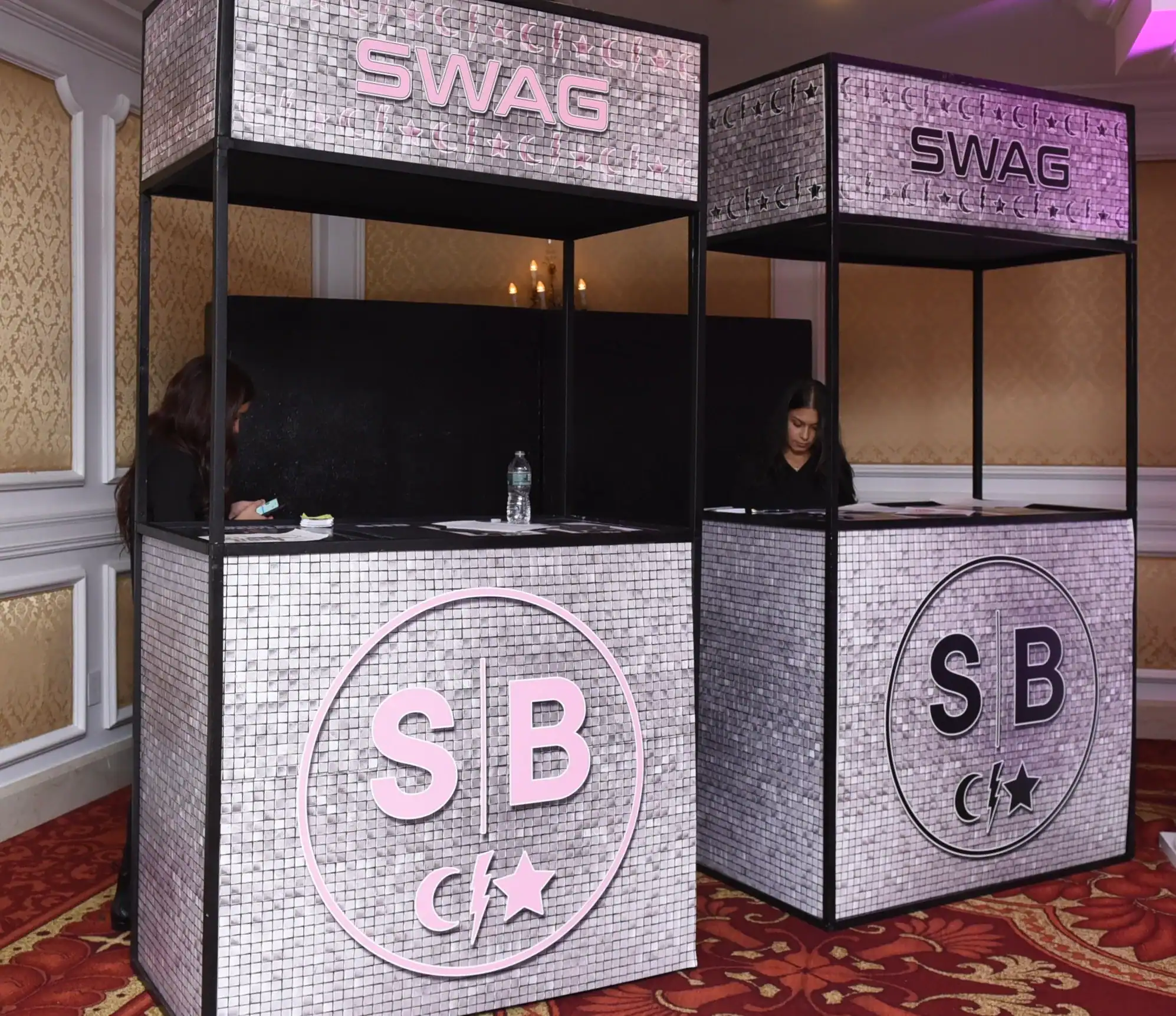
Start with the freight elevator, because it settles more arguments than anything else. Ask whether there is one, how big it is, and how much weight it holds. If the answer is a service stair or a hand-carry through the front hall, that changes how your rentals, staging, and florals need to be built and packed.
Next, ask about timing. When can vendors first get into the building, how long do they have, and when does everything need to be out? A tight window means fewer crews can work at once, and it can push you toward simpler builds.
Ask where trucks can park, too, and whether vendors can pull up close or have to carry gear from a distance. Then get into the rules about the building itself. Many historic venues ask for floor protection, and some limit what can be hung, taped, nailed, or rigged. Candles, fog, and open flame are common questions as well.
Ask which vendors need to send a certificate of insurance, whether there’s an approved or in-house vendor list, and what overtime costs if setup runs long. Vendor overtime, service charges, and permit fees are common surprise costs, and they’re much easier to deal with before the contract is signed.
Finally, ask for a floor plan and a site visit with your key vendors. Your DJ, lighting company, and florist should see the space with their own eyes. Bring this list along when you’re touring estates in Nassau County. The answers will differ from one building to the next, and you want them in writing.
This is where load-in stops being a vendor problem and becomes a design problem. A dance floor that arrives as one large piece, a lighting truss, an LED wall, or a stage may not fit through the same doors as a cocktail table. If you fall for a design before you know the limits, you either rebuild it late or give up something you wanted.
We start from the other direction. Our founder, Debbie, spent more than 12 years as Director of Sales and Events on the catering side, so she sat on the venue end of these conversations for a long time. She knows what a catering manager worries about when several vendors need the same hallway on the same afternoon. That’s why we read the venue’s rules before the design is final, not after the deposits are paid.
In practice, that means a floor plan with real measurements, a vendor timeline, and a design that fits the building. A dance floor can be planned in sections. Lighting can be chosen partly for how quickly it goes up. A themed bar or bat mitzvah (whether it’s built around the Mets, chess, butterflies, or neon flowers) still gets its big moment. It just gets built the way the building allows.
One client wrote that we handled all deliveries, measurements, and lighting, and solved problems before she knew they existed. That’s the goal. You see a finished room, and we spend the days before making sure it can exist.
Want live answers?
Connect with a Debbie Hart Celebrations expert for fast, friendly support.
If you’re looking for an event planner in Nassau County to work with a mansion venue, timing matters more than most people expect. The best moment to bring one in is before you sign the venue contract. That’s when the load-in answers can still change your decision, your date, or your design.
Hosts often assume the venue’s own coordinator has everything covered. Venue staff do manage their building, their rules, and their schedule. What they don’t manage is your design and your vendor team measured against those rules. For a bar or bat mitzvah parent comparing venues in Nassau County, that difference is worth understanding early.

A venue coordinator works for the venue. Their job is to protect the building, run its schedule, and make sure its policies are followed. They’re often excellent, and you want them on your side. But they’re not there to chase your florist for a delivery time or tell you the stage you love won’t fit the elevator.
An independent party planner or wedding planner works for you. We take the venue’s rules and turn them into a plan: who arrives when, who needs insurance paperwork, what goes in first, and what has to be out by the end of the night. When something shifts, we make the calls so you don’t have to.
That matters most on a mitzvah weekend. The date is tied to the Hebrew calendar and the Torah portion, and the family is often at services while the room is being built. Someone has to be at the mansion when the trucks pull up, and it shouldn’t be you in your good clothes. Our day-of team is there for exactly that, and clients have mentioned our day-of planner by name in their reviews.
We also work with the vendors you’ve already chosen. If your caterer, florist, or DJ is booked, we coordinate with them rather than replace them. For music and entertainment, we work closely with Richie Hart Events, so the sound and lighting side of load-in is already part of the conversation. Your vision stays yours. Our job is to make it fit the building.
Earlier than feels necessary. Nassau County has the third-largest Jewish population of any county in the country, about 255,900 people in roughly 96,500 households according to a 2011 UJA-Federation study. You’re not the only family eyeing a good estate on a popular weekend.
Mitzvah dates follow the Hebrew calendar and the synagogue’s schedule, so you can’t just slide to another Saturday when your first choice is taken. One NYC mitzvah planner recommends 12 to 18 months for a high-end event, and that’s a reasonable rule of thumb for Nassau County too.
Can a dance floor or stage go into a historic mansion? Often, yes, but it depends on the building, and the answer should come from the venue, not from a guess. We’d rather confirm dimensions and rules early than find out on load-in day.
What about weather? Nor’easters and summer storms can disrupt outdoor and waterfront setups across Nassau County, and rain, ice, and limited parking can complicate load-in anywhere on the North Shore. We’ve planned events at waterfront venues in Sea Cliff, NY, where an outdoor cocktail hour is a big draw, and a backup plan belongs in the timeline from the start.
And what does it cost? We don’t post a number here because the scope changes so much from one event to the next. The honest answer comes after a conversation about your date, your guest count, and your venue, and the first consultation is free and no-pressure.
A historic mansion can be a wonderful setting for a mitzvah or wedding, as long as you know its limits before you commit. Ask about the freight elevator, the load-in window, truck access, floor rules, insurance, and overtime. Get the answers in writing, and let them guide your design instead of surprising it.
At Debbie Hart Celebrations, we work out of Syosset and plan events across Long Island, Westchester, and NYC. If you’re comparing venues in Nassau County or already have a favorite, reach out and tell us about your date and the space you’re considering. We’ll help you figure out what the building will allow and how to build the best party inside it.
Summary:


Article details:
Share: